

Speck Ford of Prosser

Blog

All Automotive Service and Parts Dealership Blog Sales Speck Ford of Prosser Prosser, WA Ford dealer Ford Financing Used Cars, SUVs, and Trucks Used truck Automotive Finance Fuel Efficient SUV Speck Ford of Prosser service Trade-In Value Truck Maintenance Used Ford
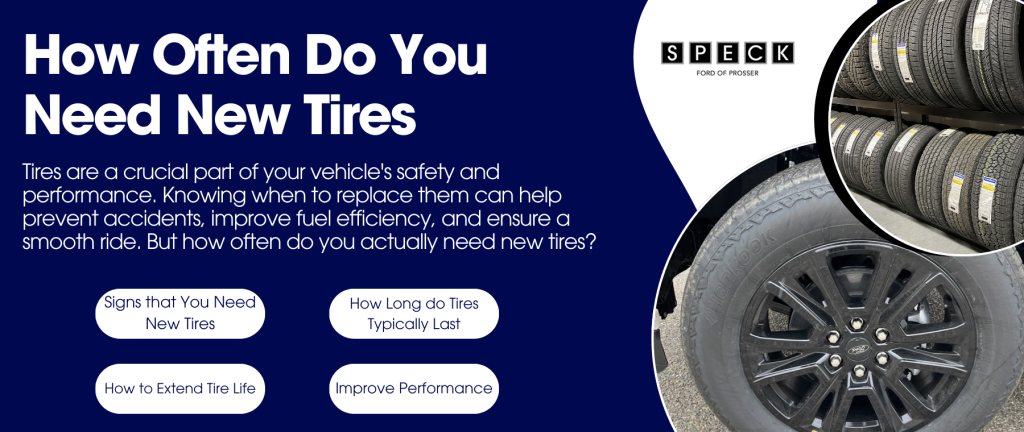
Informative image detailing how often do you need new tires

How Often Do You Need New Tires

Tires are a crucial part of your vehicle's safety and performance. Knowing when to replace them can help prevent accidents, improve fuel efficiency, and ensure a smooth ride. But how often do you actually need new tires? 1. Signs That You Need New Tires It's essential to check your tires regularly for wear and tear. Here are some key signs that indicate it's time for a replacement: Tread Depth is Too Low: If your tread depth is below 2/32 of an inch, it's time for new tires. Use the "penny test" by inserting a penny into the tread with Lincoln's head down. If you can see his entire head, your tread is too low. Visible Cracks or Bulges: Sidewall cracks and bulges can indicate structural damage, increasing the risk of a blowout. Uneven Wear: If some areas of the tread are significantly more worn than others, it could be a sign of improper alignment of inflation issues. Frequent Loss of Air Pressure: If you find yourself refilling your tires more often, there may be a slow leak or internal damage. Vibrations While Driving: Excessive vibration can be a sign of tire wear of internal damage that requires immediate attention. 2. How Long Do Tires Typically Last? The lifespan of your tires depends on factors such as driving habits, road conditions, and tire quality. However, here are some general guidelines: Standard All-Season Tires: Typically last 50,000 to 75,000 miles or about 5 to 6 years. Performance Tires: Often have a shorter lifespan, around 30,000 to 50,000 miles. Winter Tires: Should be replaced after about 4 to 5 seasons, depending on use and storage. Even if your tires appear in good condition, most manufacturers recommend replacing them every 6 to 10 years, as rubber degrades over time. 3. How to Extend Tire Life To get the most out of your tires and avoid premature replacement, follow these maintenance tips: Check Tire Pressure Regularly: Proper inflation reduces wear and improves fuel efficiency. Rotate Your Tires: Rotate every 5,000 to 8,000 miles to ensure even wear. Balance and Align Your Wheels: Helps prevent uneven wear and etends tire life. Avoid Harsh Driving Habits: Hard Braking, rapid acceleration, and excessie speeding can wear tires down faster. Final Thoughts Replacing your tires at the tight time is essential for your safety and your vehicle's performance. Keep an eye on tread depth, inspect for damage, and follow maintenance guidelines to ensure you get the most life out of your tires. When in doubt, consult a professional to assess your tires and determine if they need to be replaced. The information provided is for general informational purposes only and does not constitute legal, financial, or professional advice. While we strive to provide accurate and up-to-date information, we make no guarantees regarding the completeness, accuracy, or reliability of the information presented. Any action you take based on the context of this blog is strictly at your own risk. Always consult a qualified professional or specialist for advice specific to your situation. We are not responsible for any losses or damages arising from the use of this blog or its content.
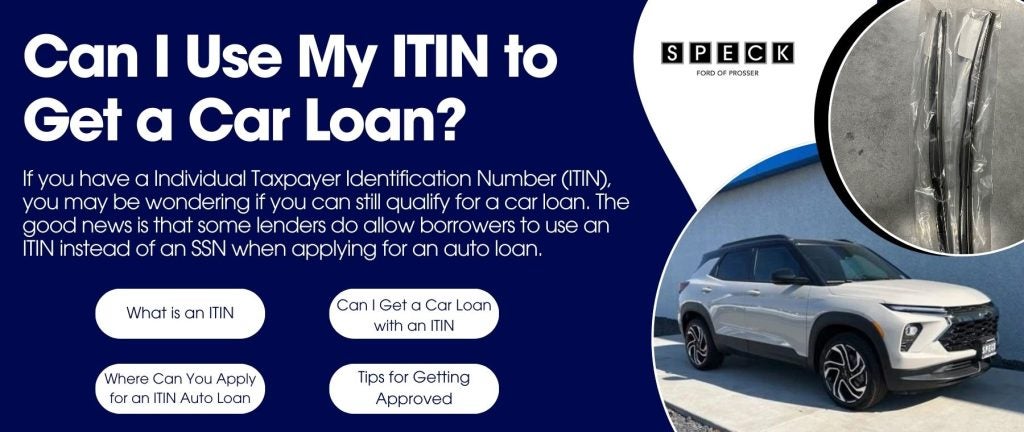
a graphic of highlighting the key points of using my ITIN

Can I Use My ITIN to Get a Car Loan

If you don't have a Social Security Number (SSN) but have an Individual Taxpayer Identification Number (ITIN), you may be wondering if you can still qualify for a car loan. The good news is that some lenders do allow borrowers to use an ITIN instead of an SSN when applying for an auto loan. 1. What Is an ITIN? An ITIN is a tax processing number issued by the IRS for individuals who are required to pay U.S. taxes but do not have an SSN. It is commonly used by non-U.S. citizens, including foreign nationals and undocumented immigrants, to file taxes and conduct financial transactions. 2. Can You Get a Car Loan with an ITIN? Yes! While many traditional lenders require an SSN, there are banks, credit unions, and specialty lenders that offer auto loans to applicants with an ITIN. Key Factors Lenders Consider: Credit History: If you're built in the U.S. using an ITIN, it will help your chances of approval. Proof of Income: Pay stubs, bank statements, or tax returns can show your ability to make payments. Residency & Employment Stability: Lenders prefer applicants with a stable residence and steady job history. Down Payment: A larger down payment can improve loan approval odds and reduce monthly payments. 3. Where Can You Apply for an ITIN Auto Loan? If you're looking for a car loan using an ITIN, consider these options: Credit Unions: Some credit unions have specialized programs for ITIN borrowers. Buy Here, Pay Here Dealerships: Certain dealerships offer financing to non-SSN applicants. Online Lenders: Some online lenders specialize in helping ITIN holders secure auto financing. Banks with ITIN Programs: A few traditional banks offer car loans to ITIN holders with strong financial profiles. 4. Tips for Getting Approved Build Your Credit: Use credit-building tools like secured credit cards or personal loans. Save for a Down Payment: A larger down payment can improve your approval chances. Have Proper Documentation: Be prepared with proof of income, residence, and identification. Consider a Co-Signer: Having a co-signer with good credit can help secure better loan terms. Final Thoughts Getting a car loan with an ITIN is possible, but it may require more research to find the right lender. By preparing your finances, building credit, and exploring different lender options, you can increase your chances of approval and secure a loan that fits your budget. The information provided is for general informational purposes only and does not constitute legal, financial, or professional advice. While we strive to provide accurate and up-to-date information, we make no guarantees regarding the completeness, accuracy, or reliability of the information presented. Any action you take based on the context of this blog is strictly at your own risk. Always consult a qualified professional or specialist for advice specific to your situation. We are not responsible for any losses or damages arising from the use of this blog or its content.

Contact Us

Fill out this form below and we'll contact you shortly
*Required Fields