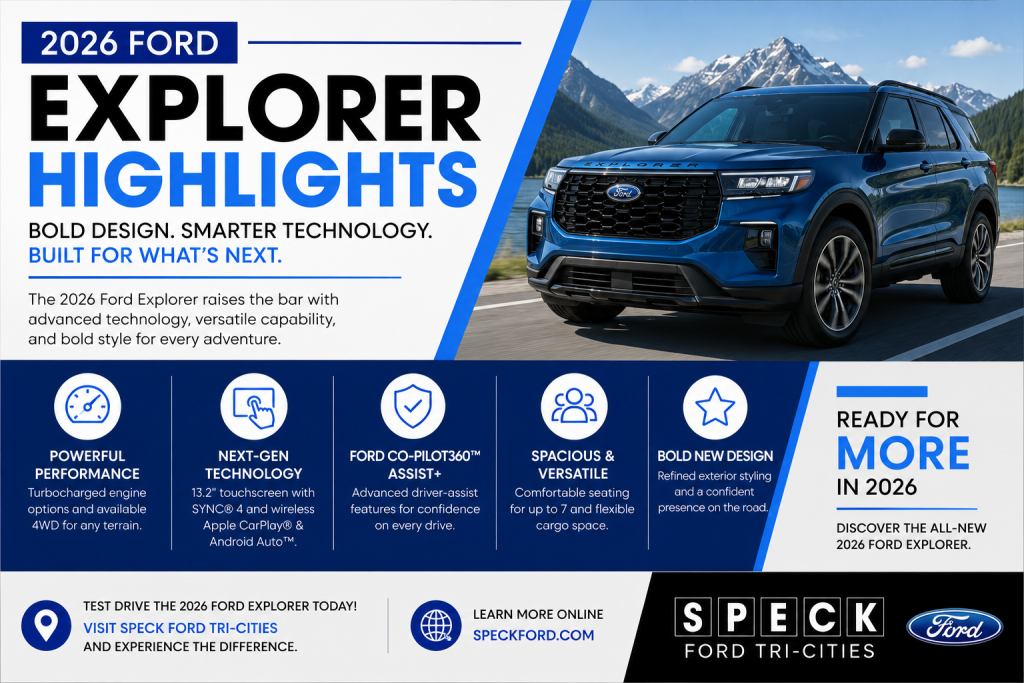
The 2026 Ford Explorer is back — and it’s more compelling than ever. With a brand-new off-road Tremor trim, hands-free highway driving, a massive 13.2″ touchscreen, available 400-horsepower performance, and a starting Ford Explorer MSRP of $38,465, the Explorer continues to be one of the most versatile three-row SUVs on the market. Whether you’re hauling the family across the Tri-Cities or heading out for a weekend adventure in the Blue Mountains, there’s a 2026 Explorer built for the way you drive. Here’s a look at the highlights.
2026 Ford Explorer Trim Lineup & Starting MSRP
The 2026 Explorer is available in six trims, from the value-focused Active to the performance-oriented ST. Every trim comes standard with a 13.2″ touchscreen, Ford Co-Pilot360, and a Class III Tow Package.
| Trim | Starting MSRP | Highlight |
|---|---|---|
| Active 100A | $38,465 | Entry-level with 13.2″ touchscreen, Co-Pilot360, Class III Tow |
| Active | $40,465 (AWD) | Adds heated front seats, power liftgate, available 20″ wheels |
| ST-Line | $45,155 (RWD) · $47,155 (AWD) | Sport styling, B&O® sound system, red stitching, BlueCruise access |
| Tremor® New for 2026 | $48,465 (AWD) | Off-road suspension, Torsen® limited-slip rear axle, all-terrain tires, 8.7″ ground clearance |
| Platinum | $50,965 (RWD) · $52,965 (AWD) | Massaging seats, panoramic fixed glass roof, BlueCruise hands-free driving |
| ST | $54,905 (RWD) · $56,905 (AWD) | 400 HP 3.0L twin-turbo V6, sport-tuned suspension, 0–60 in 5.1 sec, 21″ wheels |
*MSRPs include destination charge and exclude taxes, title, and license fees. AWD adds $2,000 where listed.
The Hottest Features on the 2026 Ford Explorer
13.2″ Ford Digital Experience
Standard on every 2026 Explorer — a massive touchscreen with Google built-in (Maps, Assistant, Play Store), wireless Apple CarPlay and Android Auto, and a 12.3″ digital instrument cluster.
Ford BlueCruise Hands-Free Driving
Available on ST-Line and above, BlueCruise now includes an Automatic Lane Change feature — letting you spend more time hands-free on compatible highways like I-82 between the Tri-Cities and Yakima.
All-New Tremor® Off-Road Trim
Brand new for 2026, the Tremor features off-road tuned suspension, a Torsen® limited-slip rear axle, steel underbody skid plates, all-terrain tires, 8.7″ ground clearance, and bold orange accent stitching.
400 HP Twin-Turbo V6 (ST)
The Explorer ST delivers 400 HP and 415 lb-ft of torque with a 0–60 time of just 5.1 seconds — making it the most powerful Explorer available and one of the quickest three-row SUVs on the road.
Panoramic Fixed Glass Roof
New for 2026 and now available on all trims, the panoramic fixed glass roof floods the cabin with natural light — a major upgrade for families who want an open, airy feel on every drive.
Massaging & Ventilated Seats
Available on Platinum and above, multi-contour massaging front seats take the edge off long Tri-Cities commutes. Ventilated first-row seats are also available — a genuine quality-of-life feature in Eastern Washington summers.
85.8 Cu Ft Cargo Space
With all seats folded, the Explorer offers up to 85.8 cu ft of cargo space. Available PowerFold® third-row seats on select trims make switching between passenger and cargo mode effortless with one touch.
B&O® Sound System
Available in a 10-speaker or 980-watt 14-speaker Bang & Olufsen configuration, both featuring a subwoofer and available Sound Stage acoustic sound bar. Premium audio that makes every road trip better.
Ford Co-Pilot360 Assist 2.0
Standard on every 2026 Explorer — pre-collision assist with automatic emergency braking, BLIS with trailer coverage, lane-keeping, and adaptive cruise control with stop-and-go.
Three Rows for Up to 7
Seats up to 7 with the second-row bench, or 6 with available captain’s chairs. Tri-zone automatic climate control keeps everyone comfortable from front to back — great for growing Tri-Cities families.
Looking for the best Ford Explorer deal near the Tri-Cities?
As your local Ford Explorer dealer in Prosser, Speck Ford carries the 2026 Explorer across multiple trims and consistently offers competitive Ford Explorer deals through manufacturer incentives and regional offers. Stop by or browse our current Explorer inventory online — our team will help you find the right trim at the right price.
The information provided is for general informational purposes only and does not constitute legal, financial, or professional advice. While we strive to provide accurate and up-to-date information, we make no guarantees regarding the completeness, accuracy, or reliability of the information presented. Any action you take based on the context of this blog is strictly at your own risk. Always consult a qualified professional or specialist for advice specific to your situation. We are not responsible for any losses or damages arising from the use of this blog or its content.
An oil change might seem like a simple service — and in many ways it is. But where you get it done matters more than most Ford owners realize. At Speck Ford’s service center in Prosser, WA, our factory-trained technicians use Ford-approved oil and genuine Ford parts to keep your vehicle running the way it was engineered to run. Here’s why skipping the quick-lube shop and bringing your Ford to a Ford dealership is worth it.
What Happens During a Ford Oil Change?
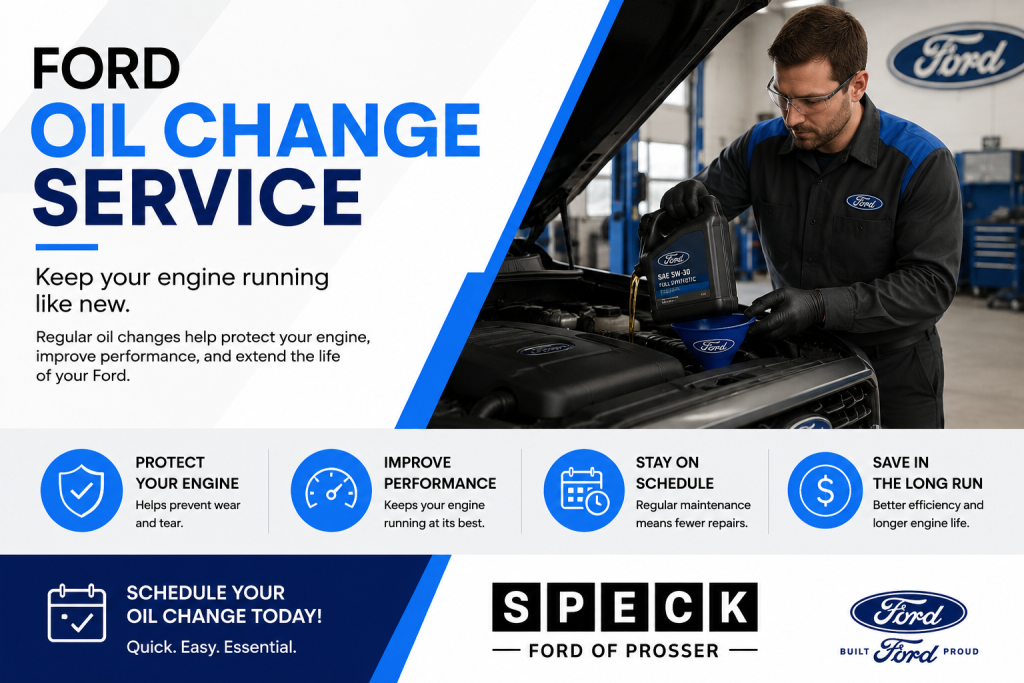
A Ford oil change at our Prosser service center isn’t just a drain-and-fill. Our technicians perform a thorough multi-point inspection alongside your oil change, so you leave with a complete picture of your vehicle’s health — not just fresh oil.
Ford-Approved Motor Oil
We use the oil type specifically recommended for your Ford engine — whether that’s conventional, synthetic blend, or full synthetic — so your engine gets exactly what Ford engineers designed it for.
Genuine Ford Oil Filter
Genuine Ford oil filters are engineered to match your vehicle’s specific engine tolerances — not a generic one-size-fits-all replacement that may not perform the same way.
Multi-Point Inspection
Every oil change includes a thorough inspection of key systems — tires, brakes, fluids, filters, belts, and more — so nothing gets missed between regular maintenance visits.
FordPass™ Integration
Service history is logged and accessible through the FordPass app, making it easy to track your maintenance records and stay on top of upcoming service needs.
Benefits of Getting Your Oil Change at a Ford Dealership
- ✓Factory-Trained Ford Technicians — Our service team is specifically trained on Ford vehicles. They know your F-150, Explorer, Escape, or Mustang inside and out — not just as a general mechanic, but as Ford specialists who work on these vehicles every day.
- ✓The Right Oil for Your Engine — Not all engines are alike, and not all oils are either. Ford specifies exact oil types and viscosities for each engine. Using the wrong oil can reduce performance and long-term engine health. At our Ford service center in Prosser, WA, we always use the correct specification for your vehicle.
- ✓Genuine Ford Parts — From the oil filter to any other components replaced during your visit, we use genuine Ford parts that meet the same standards as what came on your vehicle from the factory — not aftermarket alternatives of unknown quality.
- ✓Accurate Service Records — Every service visit at our Ford dealership is logged to your vehicle’s history. This matters when it comes to warranty claims, trade-in value, and resale — a documented Ford service history is a genuine asset when it’s time to sell or trade.
- ✓Warranty Protection — If your Ford is still under factory warranty, having your oil changes performed at an authorized Ford service center helps protect your warranty coverage. Keeping a verifiable service record matters if a warranty claim ever comes up.
- ✓Catch Problems Early — Because our techs are Ford specialists performing a multi-point inspection alongside every oil change, they’re more likely to identify Ford-specific issues early — before they become bigger, more expensive repairs.
Convenient Ford Service Right Here in Prosser
One of the most common reasons drivers go to a quick-lube shop is convenience — they don’t want to drive far or wait long. At Speck Ford in Prosser, WA, we’ve worked hard to make dealership service just as fast and easy. You don’t need to drive to Kennewick or Richland to get genuine Ford service. We’re right here in the Yakima Valley, with a service team that respects your time and gets you back on the road quickly.
Schedule your Ford oil change in Prosser today.
Whether you drive an F-150, Bronco, Explorer, Maverick, Mustang, or any other Ford, our Prosser Ford service center is ready to take care of it. Schedule online or give us a call — same-day appointments are often available.
The information provided is for general informational purposes only and does not constitute legal, financial, or professional advice. While we strive to provide accurate and up-to-date information, we make no guarantees regarding the completeness, accuracy, or reliability of the information presented. Any action you take based on the context of this blog is strictly at your own risk. Always consult a qualified professional or specialist for advice specific to your situation. We are not responsible for any losses or damages arising from the use of this blog or its content.
The Best Place for Tires in Prosser, Washington
When it’s time for new tires, most drivers in the Prosser area don’t want to make a long drive to the Tri-Cities or wait days for an appointment. At Speck Ford in Prosser, we offer a full tire service center right here in town — with same-day installations, a knowledgeable service team, and monthly specials on tires and alignments that make it easy to get what you need without breaking the budget. Here’s why Prosser-area drivers keep coming back to us for their tire needs.
Same-Day Tire Installation
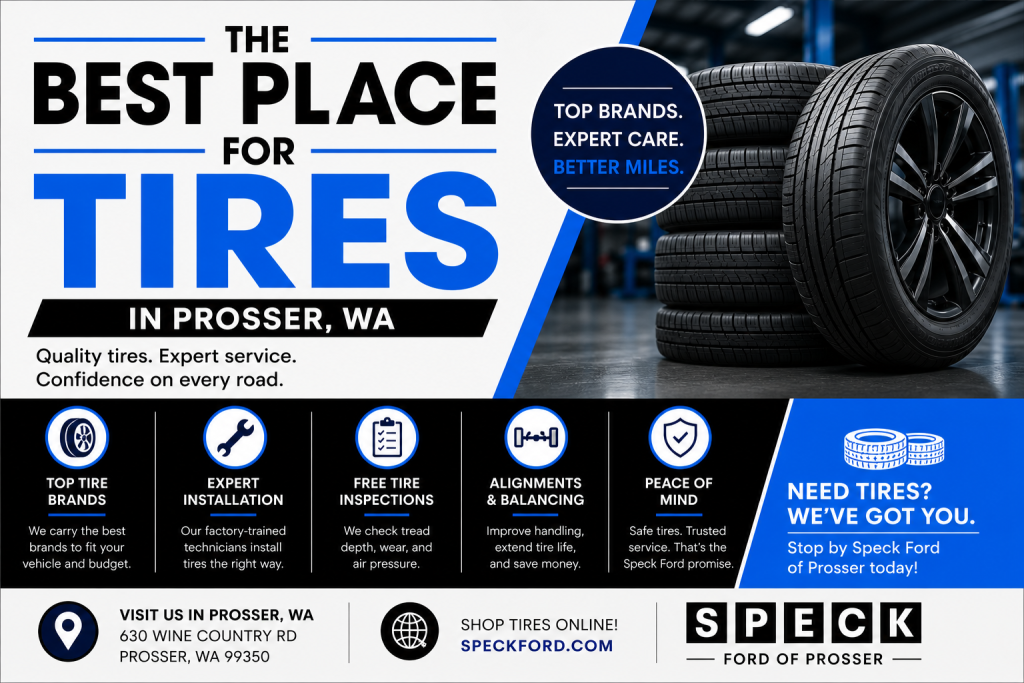
One of the biggest advantages of choosing Speck for your tires is that we can often get you in and out the same day. Whether you discovered a slow leak on the way to work, need to swap out a worn set before a road trip, or simply don’t want to spend days without your vehicle, our service team works efficiently to get your new tires mounted, balanced, and ready to go — all in one visit. No long waits, no scheduling weeks in advance. Just bring it in and we’ll take care of it.
Tire Mounting & Balancing
Every tire installation includes professional mounting and balancing — ensuring a smooth, vibration-free ride from the moment you leave our service bay.
Wheel Alignment
Proper alignment protects your new tire investment, improves handling, and maximizes fuel economy. We recommend an alignment with every new set of tires.
Tire Rotation
Regular rotations extend tire life and ensure even wear across all four tires. Quick, affordable, and essential for getting the most out of your investment.
Tire Pressure Check
We check and adjust all four tires to the manufacturer’s recommended PSI — a quick service that improves safety, fuel economy, and tire longevity.
Monthly Tire & Alignment Specials
We know tires are a significant purchase, and we work hard to make them as affordable as possible. Every month, we run updated specials on tires and alignments — including discounts on popular tire brands, bundled tire-and-alignment packages, and seasonal promotions timed around spring and fall when most drivers are thinking about their tires. These deals change monthly, so there’s almost always a current offer available that can save you money on what your vehicle needs.
Monthly Tire & Alignment Specials Available Now.
Check our current service offers online or give us a call — our team will let you know what promotions are running this month and help you find the best deal for your vehicle.
Why Choose Speck for Tires in Prosser?
- ✓Local & Convenient — No need to drive to Kennewick or Richland. We’re right here in Prosser, serving the Yakima Valley community with fast, professional tire service.
- ✓Same-Day Availability — We understand your time is valuable. Same-day installations are available so you can get back on the road without disrupting your schedule.
- ✓Trained Service Technicians — Our service team knows tires and knows vehicles. We’ll help you find the right tire for your specific make, model, driving habits, and budget.
- ✓Monthly Specials — We run regular tire and alignment promotions so you’re not paying full price when there’s a better deal available. Ask us what’s running this month.
- ✓All Makes & Models Welcome — Whether you drive a Ford, Chevy, GMC, Dodge, Nissan, Hyundai, or anything else, our service center is equipped to handle your tire needs.
Ready to get new tires in Prosser?
Schedule your service appointment online or give us a call and we’ll get you set up. Same-day service is available — and don’t forget to ask about our current tire and alignment specials before you book.
The information provided is for general informational purposes only and does not constitute legal, financial, or professional advice. While we strive to provide accurate and up-to-date information, we make no guarantees regarding the completeness, accuracy, or reliability of the information presented. Any action you take based on the context of this blog is strictly at your own risk. Always consult a qualified professional or specialist for advice specific to your situation. We are not responsible for any losses or damages arising from the use of this blog or its content.
Buying a used car doesn’t mean settling for something worn out. At Speck, we consistently stock a wide selection of low mileage used cars — including many one-owner vehicles — so you can get the value of a used car without giving up the peace of mind that comes with low miles and a clean history. Whether you’re shopping for a truck, SUV, or car, the quality of what you buy matters as much as the price.
Why We Focus on Low Mileage Inventory
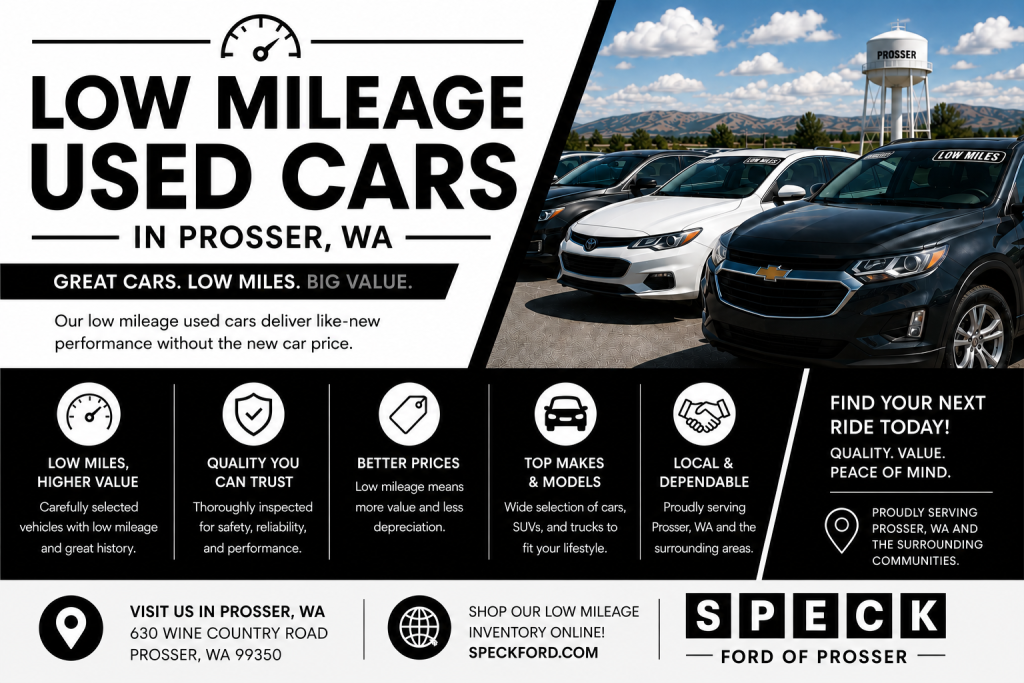
Not all used vehicles are created equal. A well-priced car with 90,000 miles is a very different purchase than the same model with 25,000 miles. At our used car dealership, we actively seek out low mileage trade-ins and off-lease vehicles that have plenty of life left — giving our customers a much better ownership experience over the long run. Many of our used vehicles come from single owners who traded in well-maintained vehicles, giving you a cleaner history and more predictable reliability from day one.
The Benefits of Buying Low Mileage
Less Wear on Major Components
Engine, transmission, brakes, and suspension all wear with use. A low mileage vehicle simply has less accumulated wear — meaning fewer repairs and lower maintenance costs in the years ahead.
Cleaner Vehicle History
Low mileage vehicles — especially one-owner examples — tend to have simpler, more transparent histories. Fewer owners means fewer unknowns about how the vehicle was driven and maintained.
Better Resale Value
Low mileage vehicles hold their value better over time. When it comes time to trade in or sell, you’ll be in a stronger position than with a higher-mileage alternative purchased at the same price.
Possible Remaining Warranty
Many low mileage used vehicles — especially recent model years — may still have a portion of the original factory warranty remaining, giving you added protection at no extra cost.
Like-New Condition
Low mileage means the interior, tech features, and mechanical systems often feel close to new. You get the modern features you want without the new-car depreciation hit in year one.
More Financing Option
Lenders are often more favorable on low mileage vehicles — better rates and longer terms are more commonly available, which can make your monthly payment more manageable.
One-Owner Vehicles — The Gold Standard of Used
Among our low mileage used car inventory, one-owner vehicles stand out as the most desirable option for buyers who want maximum confidence in their purchase. A single previous owner means a single maintenance history, a consistent driving style, and no guessing about who had the vehicle before you. We regularly carry one-owner trade-ins across a wide range of makes and models — from trucks and SUVs to family sedans and commuter cars — and our team can quickly identify one-owner options within our available inventory.
Our inventory moves fast.
Low mileage and one-owner used vehicles are always in high demand. We encourage you to browse our current used car inventory online regularly — or stop by and let our team show you what’s available right now. New vehicles arrive regularly, and the best deals don’t last long.
Whether you’re looking for a low mileage used car near Sunnyside, Prosser, or anywhere in the Tri-Cities and Yakima Valley, our used car dealership is here to help you find the right vehicle with the history and mileage that give you real confidence in your purchase. Stop by today.
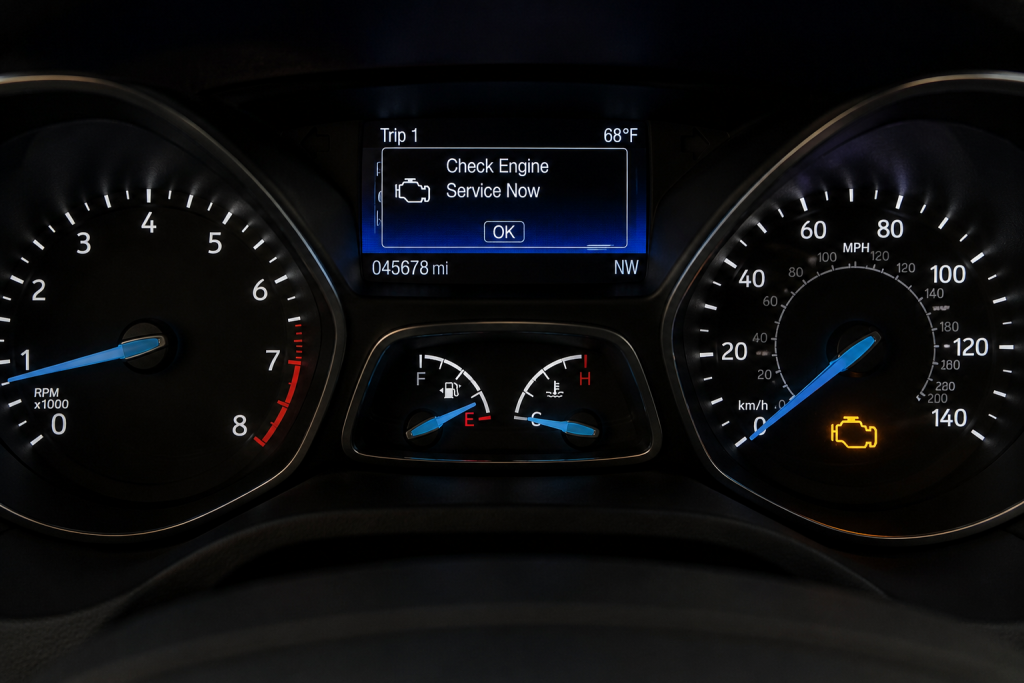
Seeing your check engine light come on can be unsettling — but it doesn’t always mean something serious. It’s your vehicle’s way of flagging that the onboard diagnostics system has detected something outside of normal parameters. The only way to know exactly what triggered it is a professional diagnostic scan, which reads the stored trouble code and points a technician to the root cause.
Solid vs. Flashing — Know the Difference
Solid Light
Not an immediate emergency, but don’t ignore it. Schedule a diagnostic appointment soon — small issues can become bigger repairs over time.
Flashing Light
Treat this as urgent. A flashing light often signals an active engine misfire that can damage your catalytic converter. Reduce speed and get it checked right away.
Most Common Causes
- Loose or faulty gas cap — One of the most common triggers. Check that your cap is tight before worrying about anything else.
- Oxygen (O2) sensor failure — Affects your air-fuel ratio and fuel economy. A very frequently triggered code.
- Spark plugs or ignition coils — Worn plugs or failing coils cause misfires, rough idling, and reduced performance.
- Mass airflow (MAF) sensor — A dirty or failing sensor throws off the fuel mixture and hurts fuel economy.
- Catalytic converter — Often triggered by ignoring other issues. Can become an expensive repair if left too long.
- EVAP system leak — Small leaks in the emissions vapor system are among the most common codes we see.
Bring it to Speck Ford in Prosser.
Our factory-trained technicians use professional diagnostic equipment to read your trouble codes, find the real cause, and get you back on the road. We serve Prosser, Sunnyside, and drivers from across the Tri-Cities and Yakima Valley. Stop by or schedule a service appointment online today.
The information provided is for general informational purposes only and does not constitute legal, financial, or professional advice. While we strive to provide accurate and up-to-date information, we make no guarantees regarding the completeness, accuracy, or reliability of the information presented. Any action you take based on the context of this blog is strictly at your own risk. Always consult a qualified professional or specialist for advice specific to your situation. We are not responsible for any losses or damages arising from the use of this blog or its content.
A Truck Built for Real Life
Finding a dependable workhorse means turning to a brand proven across the Pacific Northwest. If you haul gear, navigate rural roads, or simply want a vehicle that holds its value, Ford trucks deliver reliable capability for daily demands. For drivers in Prosser, WA, the rugged landscape calls for a truck built to conquer farm work and weekend adventures alike. Buying a used truck from Speck Ford makes perfect sense for your next vehicle purchase.
Read the rest of this entry »
When life gets busy, it’s easy to push vehicle maintenance to the back burner. But skipping routine Ford service appointments can turn small issues into expensive repairs down the road. No matter if it’s an oil change, tire rotation, or brake inspection, staying current with maintenance protects your vehicle and your wallet at the same time.
Routine upkeep also helps preserve your vehicle’s resale value. A well-documented service history shows potential buyers that the car was properly cared for, which can make a difference when it’s time to sell or trade in.
Read the rest of this entry »Whether you’re hauling a boat down to the Columbia River, pulling a horse trailer through the Yakima Valley, or moving equipment between vineyards and job sites, having the right truck makes all the difference. The Ford F-150 has long been America’s best-selling truck — and for good reason. With six engine options and a range of configurations, the Ford F-150 towing capacity and payload ratings cover nearly every hauling need a Prosser-area driver could have. Here’s everything you need to know.
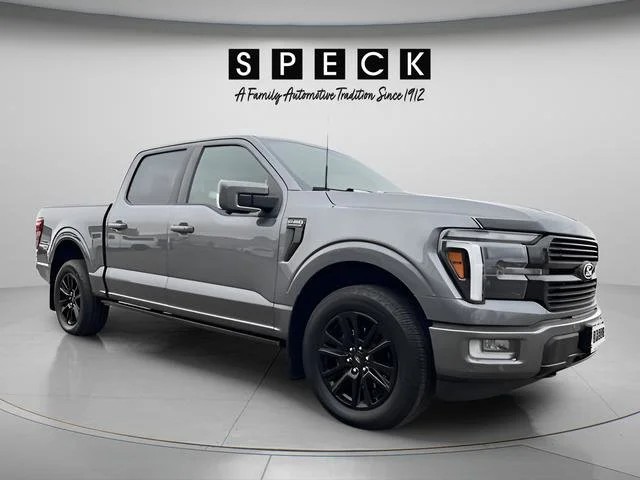
F-150 Towing Capacity by Engine
Not all Ford F-150 trucks tow the same amount. Your final tow rating depends on the engine, cab size, bed length, drivetrain, and whether your truck is equipped with the proper towing package. Here’s a breakdown of the 2025 F-150 towing capacity by engine:
| Engine | Max Towing | Max Payload |
|---|---|---|
| 3.5L EcoBoost V6 SuperCrew, 6.5′ box, 4×4 + Max Tow Package | 13,500 lbs | 2,440 lbs |
| 5.0L Ti-VCT V8 | 12,800 lbs | 2,235 lbs |
| 3.5L PowerBoost Hybrid V6 | 12,700 lbs | 1,740 lbs |
| 2.7L EcoBoost V6 | 8,400 lbs | 1,775 lbs |
| 3.0L Power Stroke Diesel V6 | 8,700 lbs | 1,400 lbs |
All figures are EPA estimates for 2025 models when properly equipped. Max tow ratings require the available Max Trailer Tow Package and specific cab/bed/axle configurations. Always verify your truck’s specific tow rating on the door jamb sticker.
Understanding Towing vs. Payload
When talking about Ford F-150 towing capacity and payload ratings, it’s important to know the difference. Towing capacity refers to the maximum weight your truck can pull behind it on a trailer. Payload capacity refers to how much weight you can carry inside the cab and bed combined — tools, gear, passengers, and cargo all count toward this number. Both matter, and exceeding either one is unsafe and can cause serious damage to your truck. For Prosser and Yakima Valley drivers hauling farm equipment, ATVs, or wine industry supplies, keeping both numbers in mind is essential.
Best Towing Setup on the F-150
To unlock the best towing performance from the F-150, you’ll want the 3.5L EcoBoost V6 paired with the Max Trailer Tow Package, which adds a 3.55 electronic-locking rear axle, an integrated trailer brake controller, and a larger 36-gallon fuel tank for longer hauls. Additional available tech like Pro Trailer Backup Assist, Blind Spot Information System with Trailer Coverage, and Trailer Sway Control make hitching up and hitting the road safer and more confidence-inspiring than ever.
Pro tip: Two F-150s that look identical on the lot can have very different tow ratings depending on their configuration. Always check the yellow sticker on the driver’s door jamb for your specific truck’s certified tow and payload ratings before hooking up a trailer.
When to Upgrade to a Ford Super Duty
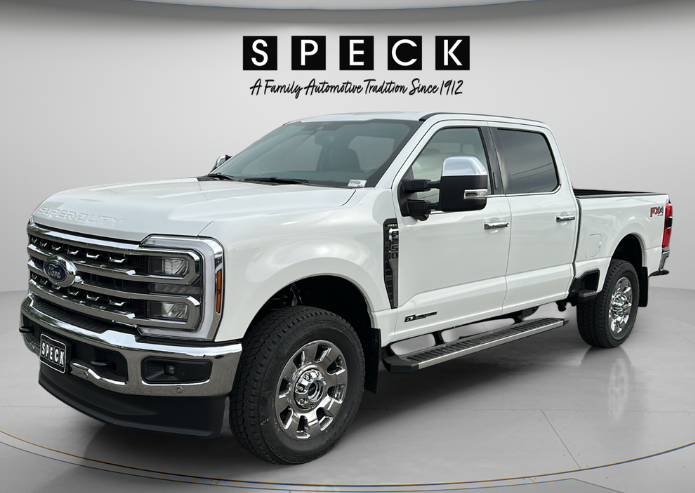
The Ford F-150 handles the vast majority of hauling needs in the Prosser area — but there are times when a heavy-duty truck is the right call. If you’re regularly pulling loads over 13,500 lbs, hauling heavy farm machinery, towing a large fifth-wheel RV, or need to carry significant weight in the bed on a daily basis, it may be time to step up to the Ford Super Duty. The F-250 offers up to 20,000 lbs of towing and 4,303 lbs of payload, while the F-350 takes it all the way to 40,000 lbs of towing and up to 8,000 lbs of payload when properly equipped. Simply put — if the job is consistently pushing or exceeding what the F-150 can handle, the Super Duty is built for exactly that.
Still not sure which Ford F-150 configuration is right for your hauling needs in Prosser? Stop by or give us a call — our team knows trucks, and we’ll help you find the right setup for the job.
The information provided is for general informational purposes only and does not constitute legal, financial, or professional advice. While we strive to provide accurate and up-to-date information, we make no guarantees regarding the completeness, accuracy, or reliability of the information presented. Any action you take based on the context of this blog is strictly at your own risk. Always consult a qualified professional or specialist for advice specific to your situation. We are not responsible for any losses or damages arising from the use of this blog or its content.
Where Should I Sell My Car Near Prosser, WA?
If you’ve been searching “sell my car near Prosser, WA” — you’re in the right place. We’re actively looking for local vehicles, and whether you want to sell your car outright or trade it in toward something new, we make the process simple and stress-free.
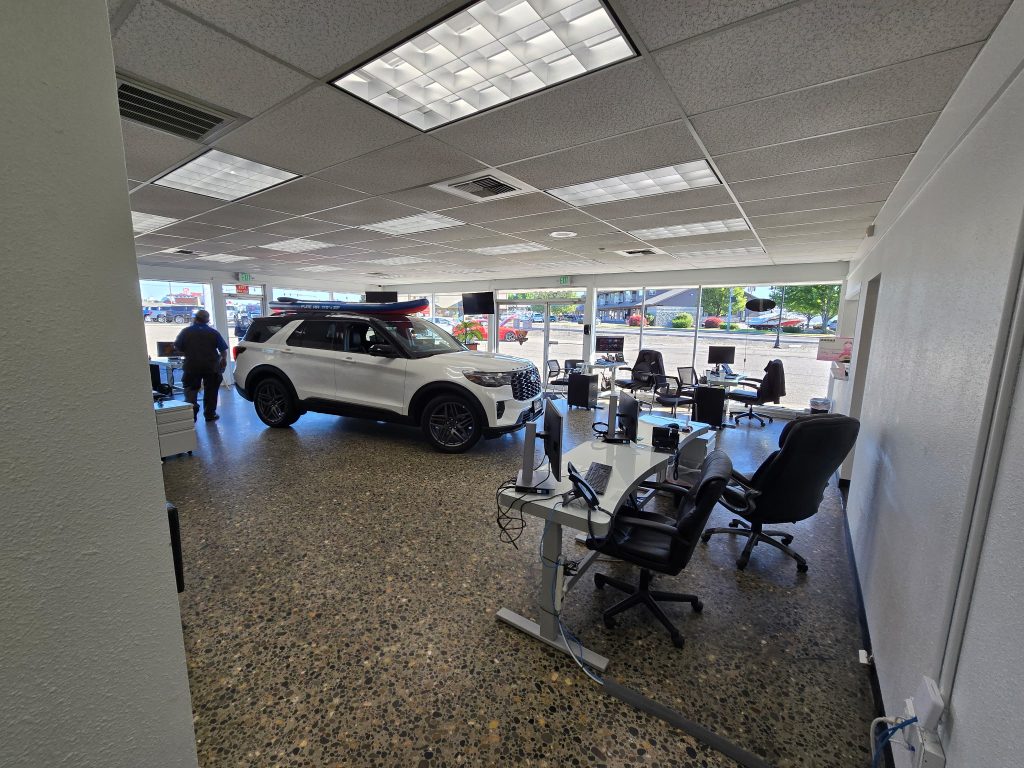
Sell Outright or Trade In — Your Choice
No purchase necessary. If you just want to sell your car to a dealership and walk away with a check, we’re happy to make that happen. Prefer to trade in? Even better. Washington State’s trade-in tax credit reduces the taxable purchase price of your next vehicle by the value of your trade — saving you hundreds at the time of sale. We also consistently offer more for trades than many dealers in the Prosser and Yakima Valley area because we want your vehicle on our lot.
Start With a KBB Estimate
Before you come in, visit kbb.com to get a free Kelley Blue Book estimate. It’s the best place to start and gives you a solid baseline for what your vehicle is worth going into the conversation.
What to Bring
- Vehicle Title
- Current Registration
- Valid Government-Issued ID
- Loan Payoff Information (if applicable)
- All Keys and Remotes
What We Inspect
Our team will evaluate your vehicle’s exterior and interior condition, tires, brakes, mechanical condition, mileage, and local market demand to build your offer.
Come See Us
Stop by for a no-pressure appraisal and let us make you a real offer. Whether you’re ready to sell your car or put it toward your next vehicle, we’re here to make it easy.
The information provided is for general informational purposes only and does not constitute legal, financial, or professional advice. While we strive to provide accurate and up-to-date information, we make no guarantees regarding the completeness, accuracy, or reliability of the information presented. Any action you take based on the context of this blog is strictly at your own risk. Always consult a qualified professional or specialist for advice specific to your situation. We are not responsible for any losses or damages arising from the use of this blog or its content.
Frequently Asked Car Loan Questions
Whether you’re buying your first vehicle or your fifth, car loans can feel overwhelming. There are a lot of terms, numbers, and decisions involved. At Speck Ford of Prosser, we want to make the financing process as simple and stress-free as possible. Here are answers to some of the most common car loan questions we hear from our customers.

What Credit Score Do I Need to Get a Car Loan?
There is no single minimum credit score required to get a car loan. Most lenders prefer a score of 600 or higher, but options are available for a wide range of credit situations. A higher credit score generally means a lower interest rate and better loan terms. If your credit isn’t perfect, don’t worry. Our finance team works with multiple lenders to find the best fit for your situation.
What Is the Difference Between Loan Term and Interest Rate?
Your loan term is the length of time you have to repay the loan, typically ranging from 24 to 84 months. Your interest rate is the percentage charged on the amount you borrow. A longer term means lower monthly payments but more interest paid overall. A shorter term costs more per month but saves you money in the long run. Finding the right balance depends on your budget and financial goals.
Can I Get Pre-Approved Before I Shop?
Yes, and we highly recommend it. Getting pre-approved gives you a clear picture of your budget before you step onto the lot. It also speeds up the buying process once you find the right vehicle. At Speck Ford of Prosser, you can apply for financing directly on our website from the comfort of your home.
Final Thoughts
Car loans don’t have to be complicated. Understanding the basics puts you in a much stronger position when it’s time to buy. The finance team at Speck Ford of Prosser is here to answer your questions, walk you through your options, and help you drive home with confidence. Stop in or reach out to our finance department today to get started.
The information provided is for general informational purposes only and does not constitute legal, financial, or professional advice. While we strive to provide accurate and up-to-date information, we make no guarantees regarding the completeness, accuracy, or reliability of the information presented. Any action you take based on the context of this blog is strictly at your own risk. Always consult a qualified professional or specialist for advice specific to your situation. We are not responsible for any losses or damages arising from the use of this blog or its content.
Connect with us

