

Speck Ford of Prosser

Blog / Used Cars, SUVs, and Trucks

Low Mileage Used Cars at Speck — Quality You Can Count On

Buying a used car doesn't mean settling for something worn out. At Speck, we consistently stock a wide selection of low mileage used cars — including many one-owner vehicles — so you can get the value of a used car without giving up the peace of mind that comes with low miles and a clean history. Whether you're shopping for a truck, SUV, or car, the quality of what you buy matters as much as the price.

Why We Focus on Low Mileage Inventory

Not all used vehicles are created equal. A well-priced car with 90,000 miles is a very different purchase than the same model with 25,000 miles. At our used car dealership, we actively seek out low mileage trade-ins and off-lease vehicles that have plenty of life left — giving our customers a much better ownership experience over the long run. Many of our used vehicles come from single owners who traded in well-maintained vehicles, giving you a cleaner history and more predictable reliability from day one.

The Benefits of Buying Low Mileage

Less Wear on Major Components

Engine, transmission, brakes, and suspension all wear with use. A low mileage vehicle simply has less accumulated wear — meaning fewer repairs and lower maintenance costs in the years ahead.

Cleaner Vehicle History

Low mileage vehicles — especially one-owner examples — tend to have simpler, more transparent histories. Fewer owners means fewer unknowns about how the vehicle was driven and maintained.

Better Resale Value

Low mileage vehicles hold their value better over time. When it comes time to trade in or sell, you'll be in a stronger position than with a higher-mileage alternative purchased at the same price.

Possible Remaining Warranty

Many low mileage used vehicles — especially recent model years — may still have a portion of the original factory warranty remaining, giving you added protection at no extra cost.

Like-New Condition

Low mileage means the interior, tech features, and mechanical systems often feel close to new. You get the modern features you want without the new-car depreciation hit in year one.

More Financing Option

Lenders are often more favorable on low mileage vehicles — better rates and longer terms are more commonly available, which can make your monthly payment more manageable.

One-Owner Vehicles — The Gold Standard of Used

Among our low mileage used car inventory, one-owner vehicles stand out as the most desirable option for buyers who want maximum confidence in their purchase. A single previous owner means a single maintenance history, a consistent driving style, and no guessing about who had the vehicle before you. We regularly carry one-owner trade-ins across a wide range of makes and models — from trucks and SUVs to family sedans and commuter cars — and our team can quickly identify one-owner options within our available inventory.

Our inventory moves fast. 

Low mileage and one-owner used vehicles are always in high demand. We encourage you to browse our current used car inventory online regularly — or stop by and let our team show you what's available right now. New vehicles arrive regularly, and the best deals don't last long.

Whether you're looking for a low mileage used car near Sunnyside, Prosser, or anywhere in the Tri-Cities and Yakima Valley, our used car dealership is here to help you find the right vehicle with the history and mileage that give you real confidence in your purchase. Stop by today.
Posted in:

Recommended Posts

tech-cleaning-headlights

How to Clean Foggy Headlights on Your Ford: A Step-by-Step Guide

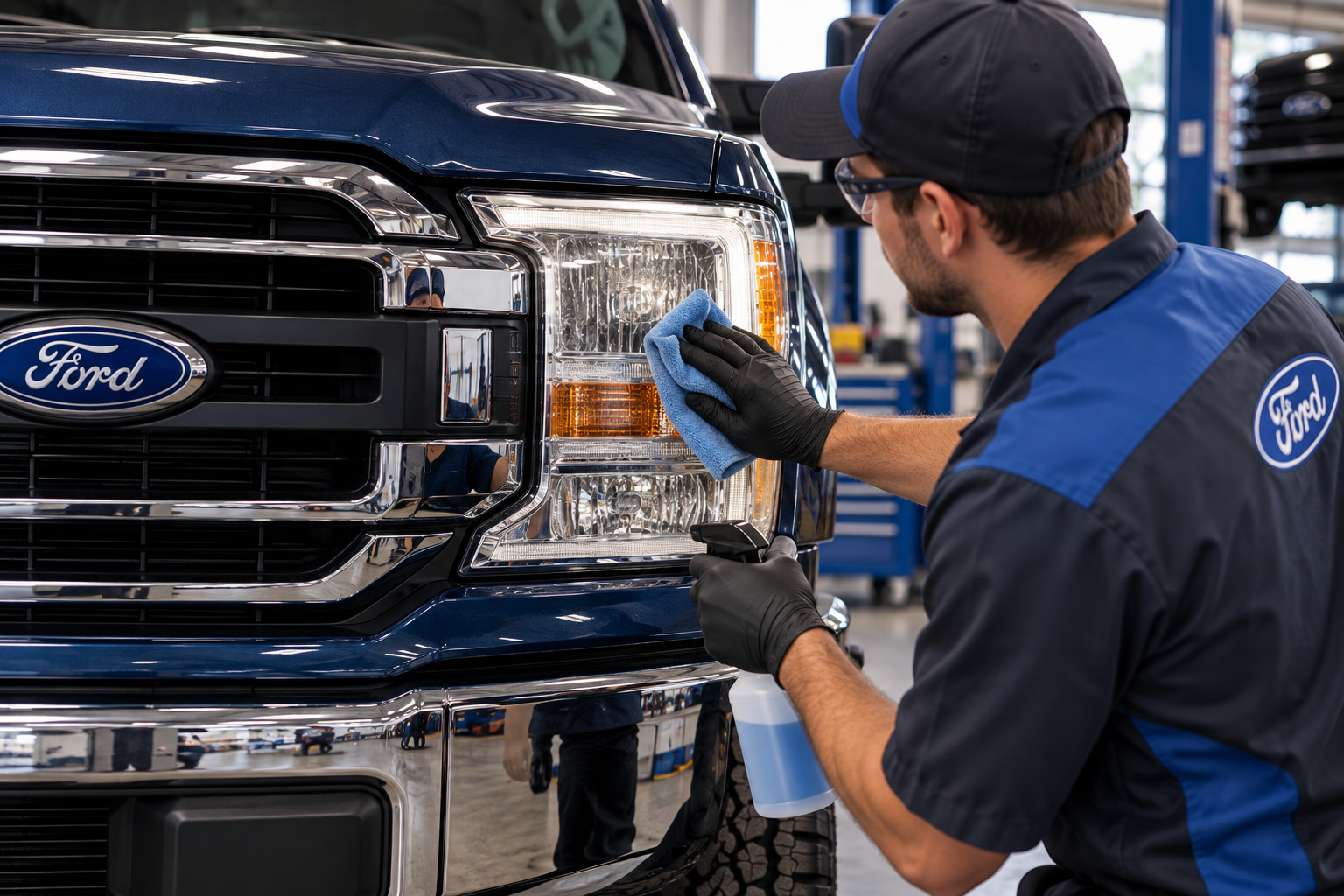
Foggy, cloudy, or yellowed headlights are one of the most common issues Ford owners face as their vehicles age. Cloudy headlights reduce your visibility significantly and make your Ford look older than it actually is. Here is your complete guide to how to clean cloudy headlights and when to consider professional headlight restoration near the Tri-Cities, WA at Speck Ford of Prosser. Why Do Headlights Get Cloudy? Most modern Ford headlight lenses are made from polycarbonate plastic rather than glass. The Yakima Valley receives over 300 days of sunshine per year making UV damage to headlight lenses especially common for Eastern Washington Ford owners. Here is why headlights get cloudy over time: UV Oxidation Most headlight lenses have a factory UV protective coating that degrades over time from constant sun exposure. Once that coating is gone, the lens surface begins to oxidize and turn yellow, cloudy, and hazy. Road Debris and Scratching Rocks, gravel, and sand scratch and pit your headlight lens surface over time. Yakima Valley drivers who regularly travel gravel roads around Prosser and Sunnyside are especially susceptible to road debris damage. Why Clean Headlights Matter Cloudy headlights can reduce your headlight output by up to 80 percent compared to new clear lenses. Shorter fall and winter days in the Tri-Cities mean more driving in the dark every single day. Kennewick, Richland, and Pasco commuters who drive home after work in the dark need every bit of headlight output available. Headlight restoration is a safety issue as much as it is a cosmetic one. Steps for Cleaning Foggy Headlights What You Will Need: Headlight restoration kit including sandpaper, polishing compound, and UV sealant Masking tape to protect surrounding paint Clean microfiber cloths and spray bottle with water Car wash soap, gloves, and eye protection Step 1: Wash and Dry Your Headlights Wash your headlight lenses thoroughly with car wash soap and water. Remove all surface dirt and debris before beginning the restoration process. Dry completely with a clean microfiber cloth before moving forward. Step 2: Mask Off the Surrounding Paint Apply masking tape carefully around the entire perimeter of each headlight lens. Cover all painted body panels and trim adjacent to the headlight housing. This protects your Ford's paint finish from accidental scratching during sanding and polishing. Step 3: Wet Sand the Lens Surface Wet sand the headlight lens starting with the coarsest sandpaper in your restoration kit. Keep the lens and sandpaper wet throughout the entire sanding process. Progress through finer grits until the lens surface appears uniformly hazy and scratch-free. Step 4: Apply Polishing Compound Work the polishing compound into the lens using firm circular motions across the entire surface. Continue polishing until the lens begins to clear and hazy sanding marks disappear. Wipe away compound residue with a clean microfiber cloth. Step 5: Apply UV Sealant This is the most important step that many DIY guides skip entirely. Apply the UV sealant included in your restoration kit to both headlight lenses. Without UV sealant, your headlights will begin to yellow and cloud again within a few months of restoration. Step 6: Remove Masking Tape and Inspect Carefully remove the masking tape after the UV sealant has fully dried. Your headlights should now appear noticeably clearer and brighter than before the restoration process. Tips to Keep Headlights Clear Here are our top tips for how to keep headlights from yellowing after restoration: Park in a garage or shaded area whenever possible to reduce UV exposure Apply a quality UV protectant to your headlight lenses every six months Wash your headlight lenses regularly during routine car washes Avoid harsh chemical cleaners that degrade the UV protective coating faster Apply a coat of car wax to your headlight lenses after washing for added protection When to Replace Your Headlights Sometimes headlight restoration is not enough and headlight replacement is the right solution. Consider headlight replacement in Prosser, WA when: The lens has deep cracks, chips, or physical damage that cannot be polished out Water or moisture is visible inside the headlight housing causing internal fogging Headlight restoration has been performed multiple times with diminishing results Your headlight output is still significantly reduced even after a thorough restoration Our service team at Speck Ford of Prosser will honestly evaluate your headlights and recommend restoration or replacement based on your actual lens condition. Professional Headlight Restoration vs DIY Professional headlight restoration near the Tri-Cities, WA at Speck Ford offers several advantages over DIY kits: Professional-grade equipment produces better and longer-lasting results Our team applies a superior UV coating that lasts significantly longer than DIY kits Our certified technicians identify whether restoration or headlight replacement is the better option Professional restoration uses Genuine Ford OEM replacement parts if replacement is needed Schedule Your Headlight Service at Speck Ford of Prosser Ready to schedule your headlight restoration near the Tri-Cities, WA or headlight replacement in Prosser, WA? Here is how to book your appointment: Online: Visit our website and click "Schedule Service" By Phone: Call our service department directly Walk-In: Stop by during service hours for same-day headlight inspection Do not drive through fall and winter Yakima Valley nights with cloudy headlights. Schedule your headlight restoration at Speck Ford of Prosser today and see the road more clearly on every drive. Schedule Service The information provided is for general informational purposes only and does not constitute legal, financial, or professional advice. While we strive to provide accurate and up-to-date information, we make no guarantees regarding the completeness, accuracy, or reliability of the information presented. Any action you take based on the context of this blog is strictly at your own risk. Always consult a qualified professional or specialist for advice specific to your situation. We are not responsible for any losses or damages arising from the use of this blog or its content.

f250-trucks-doing-different-tasks

Ford F-250 Gas vs Diesel: Which Makes Sense for Your Work?

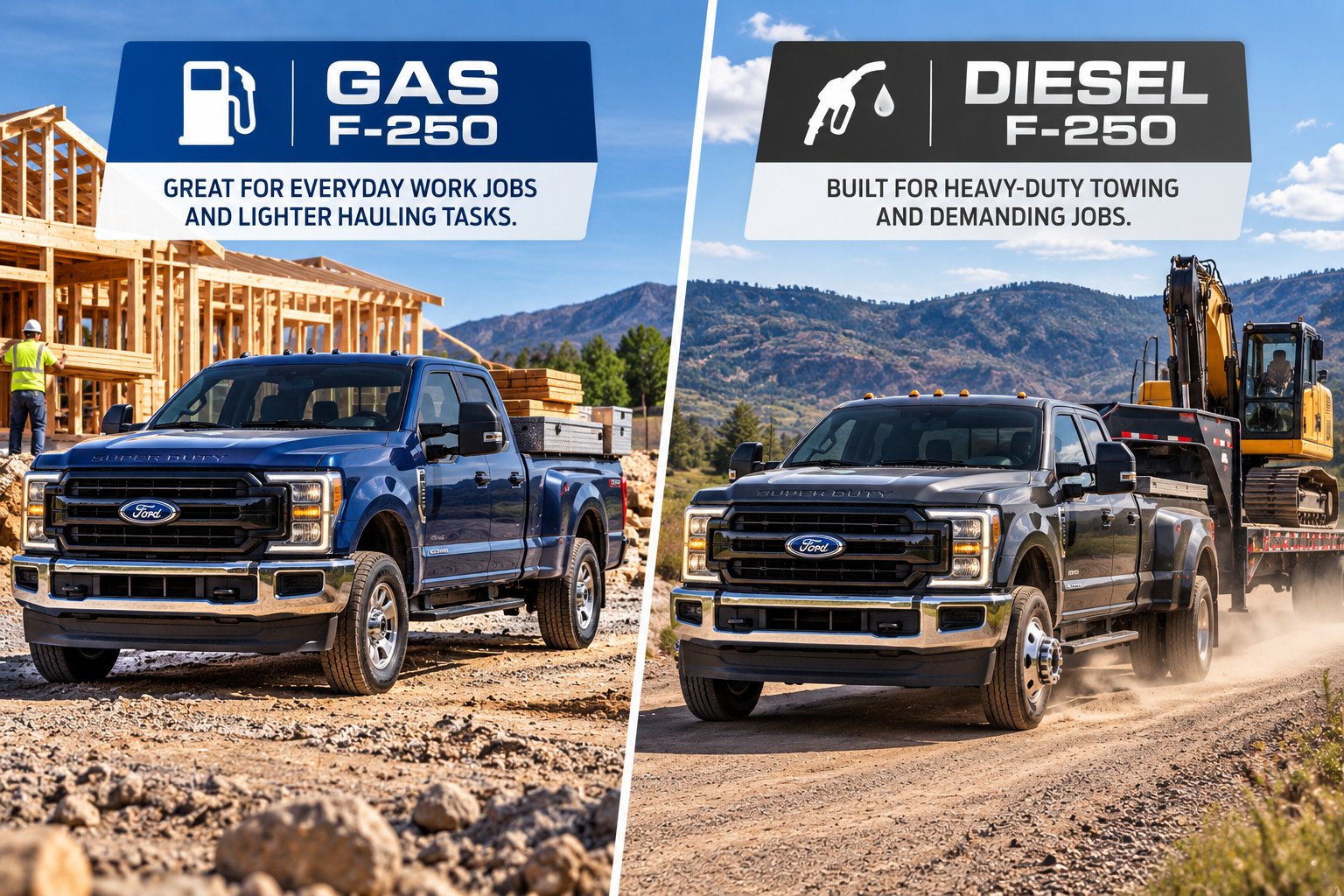
If you are shopping for a new F-250 for sale near Prosser, WA, one of the biggest decisions you will face is gas vs diesel. Both engines are proven, powerful, and capable of handling serious work across the Yakima Valley and Tri-Cities area. Here is your complete super duty gas vs diesel guide from Speck Ford of Prosser. F-250 Engine Options 6.2L V8 Gas: 400 HP · 464 lb-ft Torque · Standard Engine A proven and reliable workhorse at a lower upfront price than diesel. Simpler and less expensive to maintain over the life of the truck. 7.3L V8 Gas: 430 HP · 475 lb-ft Torque · Available Upgrade More power than the 6.2L without the diesel premium. A great middle-ground option for Prosser and Yakima Valley buyers who need more capability. 6.7L Power Stroke Turbo Diesel: 500 HP · 1,200 lb-ft Torque · Available Upgrade The most powerful and capable engine in the F-250 lineup. The clear choice for farmers, ranchers, and contractors who regularly push their truck to maximum towing capacity. Towing: Where Diesel Shines Engine Max Conventional Towing Max Fifth-Wheel Towing 6.2L V8 Gas 15,000 lbs 18,000 lbs 7.3L V8 Gas 17,500 lbs 20,000 lbs 6.7L Diesel 22,800 lbs 27,500 lbs The diesel engine's torque advantage is most noticeable during sustained heavy towing on long highway grades. Pulling a heavy fifth-wheel over Snoqualmie Pass or towing a livestock trailer across the Horse Heaven Hills is noticeably more relaxed with the diesel engine. Payload: Where Gas Has the Edge The diesel engine is significantly heavier than either gas option. That additional weight reduces your available F-250 payload capacity compared to an equivalent gas-equipped truck. Engine Max Payload Capacity 6.2L V8 Gas Up to 4,260 lbs 7.3L V8 Gas Up to 4,200 lbs 6.7L Diesel Up to 3,990 lbs If hauling maximum weight in the bed is a priority, the gas engine gives you slightly more available payload capacity for Tri-Cities job site work. Upfront Cost The 6.7L Power Stroke diesel option typically adds $10,000 or more to the purchase price of a new F-250. The 7.3L gas engine upgrade is a much smaller investment and provides meaningful power improvements over the standard 6.2L. Our team at Speck Ford of Prosser will help you evaluate whether the diesel premium makes financial sense for your work needs. Fuel and Maintenance Costs Diesel fuel is sometimes more expensive than regular gasoline at Prosser and Yakima Valley stations. However, the diesel's superior fuel economy on long highway hauls can offset the higher per-gallon cost for high-mileage drivers. Diesel engines also require more specialized maintenance including more expensive oil changes and regular diesel exhaust fluid (DEF) refilling. Gas engines are generally simpler and less expensive to maintain throughout their service life. Diesel-equipped F-250 trucks typically command a significantly stronger resale value at trade-in time. Which Option Is Best for Your Lifestyle? Yakima Valley Farmer or Rancher You regularly pull livestock trailers and heavy farm loads across Benton County and Eastern Washington. Your loads frequently approach or exceed 18,000 pounds behind the truck. Recommendation: 6.7L Power Stroke Diesel The diesel's massive torque and superior towing capacity make it the clear choice. Is a diesel truck worth it for this application? Absolutely yes. Tri-Cities Contractor or Builder You haul materials and equipment around Kennewick, Richland, and Pasco job sites every day. Your loads rarely exceed 15,000 pounds and you do mostly city and short highway driving. Recommendation: 7.3L V8 Gas The 7.3L handles typical contractor loads comfortably without the diesel premium. City driving and short trips do not favor the diesel's fuel economy advantage. Weekend Recreational Tower You tow a fifth-wheel camper or large boat on weekends with trailer weights between 16,000 and 22,000 pounds. You regularly travel to campgrounds and recreational destinations across Eastern Washington. Recommendation: 6.7L Power Stroke Diesel The diesel makes towing a heavy fifth-wheel noticeably more relaxed on long highway stretches. For loads over 18,000 pounds, the diesel is the safer and smarter choice. Light to Moderate Work Truck You need heavy-duty capability occasionally but most daily use involves lighter loads and everyday driving around Prosser and the Yakima Valley. Recommendation: 6.2L V8 Gas If your loads stay well within the gas engine's capability, the lower upfront cost and simpler maintenance make the most financial sense. Built for Tri-Cities Work From vineyard and orchard operations in Benton County to construction projects across Kennewick, Richland, and Pasco, the F-250 Super Duty is the workhorse of choice for Eastern Washington's hardest working drivers. Both gas and diesel options are fully capable of handling Tri-Cities area work demands. The right choice simply depends on the size and frequency of your loads. Find Your F-250 for Sale Near Prosser Ready to find your perfect F-250 for sale near Prosser, WA at your local Ford Super Duty dealer near Prosser? Our team knows every detail of both gas and diesel Super Duty configurations. Here is how to get started: Online: Browse our current F-250 Super Duty inventory at our website By Phone: Call our sales team directly to discuss your engine needs Walk-In: Stop by during business hours for a test drive and comparison We serve Prosser, Sunnyside, Grandview, Kennewick, Richland, Pasco, and the entire Yakima Valley. Your perfect F-250 for sale near Prosser is waiting for you at Speck Ford of Prosser today. Shop Ford Super Duty The information provided is for general informational purposes only and does not constitute legal, financial, or professional advice. While we strive to provide accurate and up-to-date information, we make no guarantees regarding the completeness, accuracy, or reliability of the information presented. Any action you take based on the context of this blog is strictly at your own risk. Always consult a qualified professional or specialist for advice specific to your situation. We are not responsible for any losses or damages arising from the use of this blog or its content.

uneven-tire-wear-on-a-f150

What Causes Uneven Tire Wear on a Ford F-150?

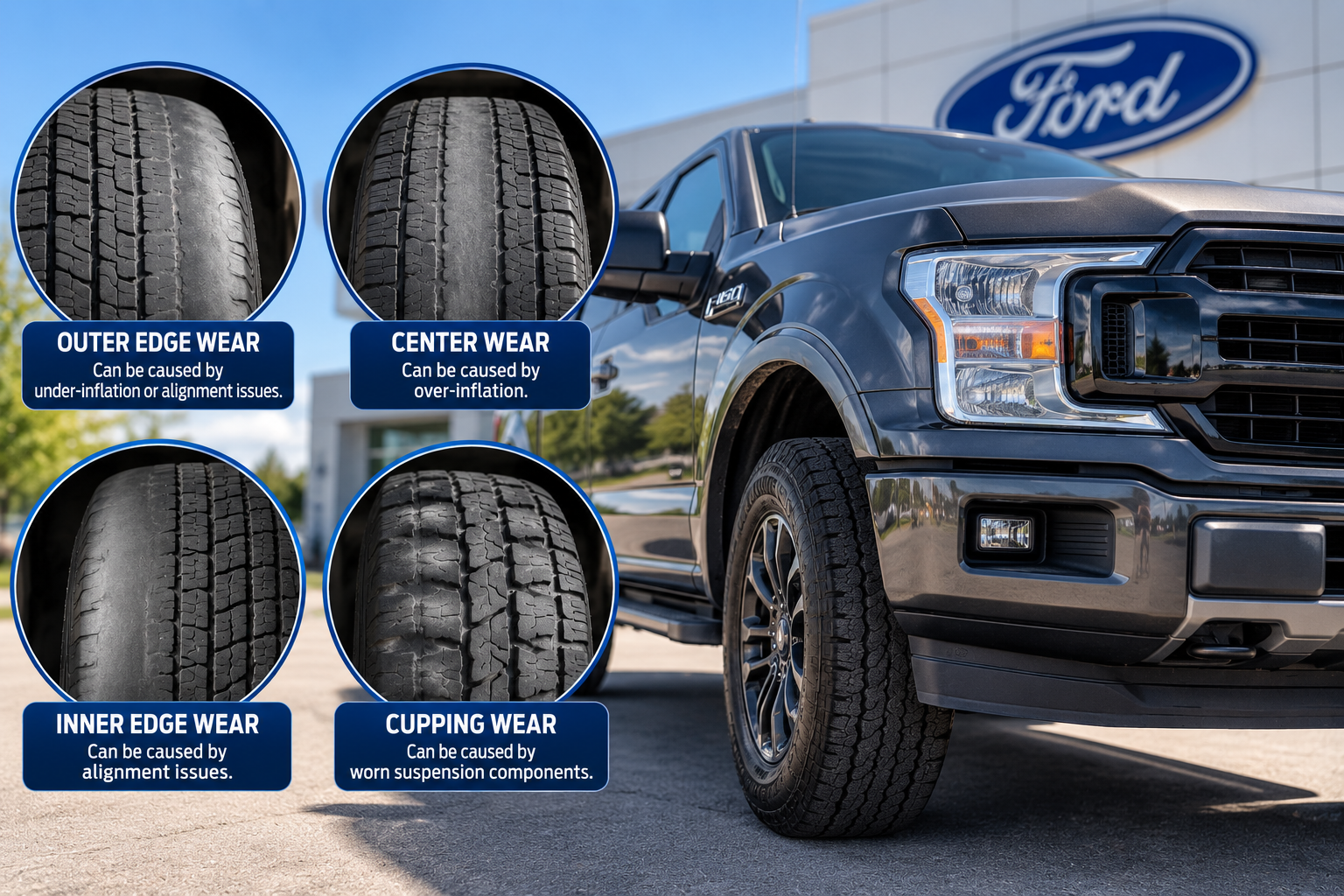
Uneven tire wear is one of the most common and most costly maintenance issues Yakima Valley F-150 owners face. Catching F-150 uneven tire wear early can save you hundreds of dollars on premature tire replacement. Here is your complete guide to what causes uneven tire wear, how to read tire wear patterns, and how to get professional tire service in Prosser at Speck Ford of Prosser. Why Uneven Tire Wear Matters Your tires are the only contact point between your F-150 and the road surface. Uneven tire wear reduces traction, handling, braking performance, and fuel economy significantly. It also dramatically shortens the overall life of your tires leading to premature and costly replacement. Addressing F-150 uneven tire wear early almost always means a less expensive repair than waiting until the problem becomes severe. Tire Wear Pattern Guide Wear Pattern What It Looks Like Most Likely Cause Center Wear Worn in middle, good on edges Overinflated tires Edge Wear Worn on both outer edges Underinflated tires Inner Tire Wear Worn heavily on inside edge Negative camber or alignment issue Outer Edge Wear Worn heavily on outside edge Positive camber or alignment issue Feathering Smooth on one side, sharp on other Toe alignment out of specification Cupping/Scalloping Dips or cups around tread Worn shocks or struts Patchy Wear Uneven patches around tire Tire balance issue or flat spot Common Causes of Uneven Tire Wear on a Ford F-150 Incorrect Tire Pressure Incorrect tire pressure is the single most common cause of uneven tire wear on any vehicle. Overinflated tires wear faster in the center of the tread. Underinflated tires wear faster on both outer edges. Always check your F-150's tire pressure when tires are cold and inflate to the recommended PSI on your door jamb sticker. Wheel Alignment Issues Wheel alignment problems are one of the most common causes of inner tire wear and outer edge wear on the F-150. When your wheels are not pointing in the correct direction, the tire scrubs against the road at an angle. Yakima Valley drivers who regularly travel rural roads or hit potholes on US-12 are especially susceptible to alignment issues. Tire Imbalance Unbalanced tires cause the wheel assembly to vibrate during driving creating cupping or scalloping wear patterns. Tire balancing should be performed every time new tires are installed and rechecked at regular intervals. Our tire service in Prosser at Speck Ford includes professional tire balancing on every rotation visit. Worn Shocks or Struts Worn shocks or struts allow your tires to bounce and hop during driving creating cupping wear patterns on your tires. If your F-150 has significant mileage and you notice cupping wear, have your shocks and struts inspected right away. Infrequent Tire Rotations Front and rear tires on your F-150 wear at different rates due to different driving forces on each axle. Most Ford service professionals recommend rotating your F-150's tires every 5,000 to 7,500 miles. Our tire service in Prosser at Speck Ford can handle your rotation during your next oil change visit. Signs You Should Have Your Tires Checked Your F-150 pulls to the left or right on a straight road You notice visible tire wear patterns that look uneven across the tread You feel vibration through the steering wheel at highway speeds on I-82 or US-395 Your ride feels rougher or bouncier than it used to on Yakima Valley roads You hear unusual humming or roaring noises from your tires during normal driving Your front tires are wearing noticeably faster than your rear tires between rotations How to Check Your Tire Tread Depth The Quarter Test Insert a quarter into your tread groove with Washington's head pointing down. If you can see the top of Washington's head, your tread is at or below 4/32 inch and replacement should be considered soon. The Penny Test Insert a penny into your tread groove with Lincoln's head pointing down. If you can see the top of Lincoln's head, your tread is at or below 2/32 inch. That is the legal minimum in Washington State and means immediate replacement is needed. Tread Depth Reference Guide Tread Depth Condition Recommendation 6/32 inch or more Good Continue regular maintenance 4/32 inch Fair Plan for replacement soon 2/32 inch Worn Replace immediately Below 2/32 inch Unsafe Do not drive on these tires How to Prevent Uneven Tire Wear on Your F-150 Check and adjust tire pressure at least once a month and before every road trip Rotate your tires every 5,000 to 7,500 miles or at every oil change visit Have your wheel alignment checked at least once a year or after any significant impact Have your tire balancing checked at every tire rotation and when installing new tires Inspect shocks, struts, ball joints, and tie rods at every major service interval Check your tires visually for unusual tire wear patterns at least once a month Get Professional Tire Service in Prosser at Speck Ford Ready to schedule your tire service in Prosser or alignment in Prosser at Speck Ford of Prosser? Our certified technicians use professional-grade equipment to diagnose and correct F-150 uneven tire wear quickly and accurately. Here is how to schedule your appointment: Online: Visit our website and click "Schedule Service" By Phone: Call our service department directly Walk-In: Stop by during service hours for same-day tire inspection Do not ignore uneven tire wear on your F-150. Schedule your tire service in Prosser at Speck Ford today and keep your truck performing safely on Yakima Valley roads. Schedule Service The information provided is for general informational purposes only and does not constitute legal, financial, or professional advice. While we strive to provide accurate and up-to-date information, we make no guarantees regarding the completeness, accuracy, or reliability of the information presented. Any action you take based on the context of this blog is strictly at your own risk. Always consult a qualified professional or specialist for advice specific to your situation. We are not responsible for any losses or damages arising from the use of this blog or its content.